
Navigating Curators, Galleries, and Academia
Demystify the print industry with Clara Lieu and Ann Shafer as they map out a “who’s who” of curators, gallerists, academics, and publishers at the Brooklyn Print Fair.
Friday, Apr 10, 4-5pm, Small Hall
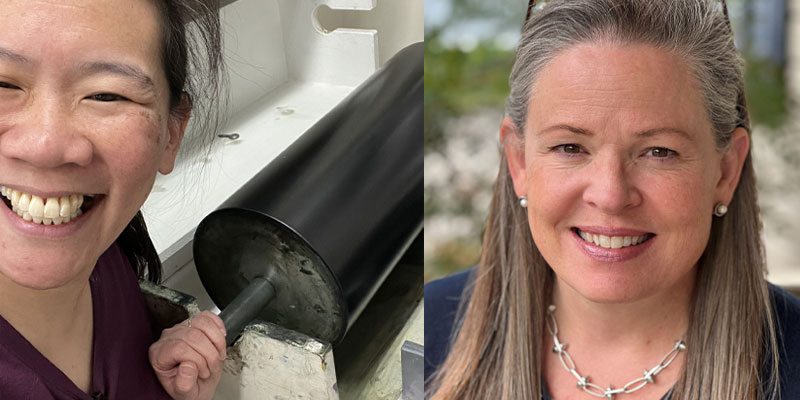
Learn how to approach these gatekeepers with confidence through a series of professional insights and tips designed to help artists find their place in the printmaking ecosystem.
Table of Contents

In the printmaking ecosystem, professors and curators serve as the primary “validators” of an artist’s career.
Professors
Validates the process, intent, and growth of the artist.
Curators, Gallerists
Validates the result, historical relevance, and market readiness.

Who’s Who in Printmaking
Publisher
Collaborates with the artist to fund and produce the edition.
Dealer/Gallerist
Acts as the primary bridge to collectors and museums.
Master Printer
The technical expert who ensures the edition is flawless.
Independent Print Fair
A space for self-representing artists and academic departments to bypass traditional models.
Artist Statement vs. Curatorial Essay
Artist’s role
To articulate the “Why.” Use clear language to provide a “hook.”
Curator’s role
To fit the “Why” into a larger cultural or historical narrative.
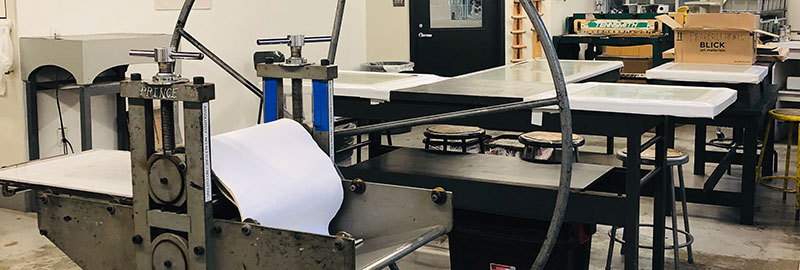
Price vs. Value
Take 2 identical-sized prints:
Why is 1 $200 and the other $2,000?
Process
Was it a multi-plate etching or a single-layer screenprint?
Collaboration
Was it self-printed or produced with a Master Printer?
Provenance
Does the artist have an exhibition history? Are they in museum collections?
MFA Programs
The vast majority of MFA candidates apply as painting majors. By comparison, the candidates who apply to major in printmaking is small.
MFA programs are extremely competitive to begin with. If you have printmaking experience, printmaking can be a good choice as the number of applications is not as big as painting.
MFA Guide ~ Art School Admissions Bundle
Portfolio Critiques ~ Mentoring ~ Statement Editing
Printmaking Myths
“I need an MFA to be in a museum/gallery.”
Curators look for a rigorous, consistent practice. The work is your resume; the degree is a credential.
“1/100 is better than 100/100.”
In a professional edition, every impression is intended to be identical in quality.

“Prints are just reproductions.”
Fine art prints are primary, original works created specifically for the medium.
“Digital isn’t ‘real’ printmaking.”
The ecosystem is evolving. Digital processes are now a standard tool in contemporary print culture.

Printshops
Each printshop has a range of programs and services which might include studio space, membership, workshops, print exchanges, classes, and more.
Fairs & Conferences
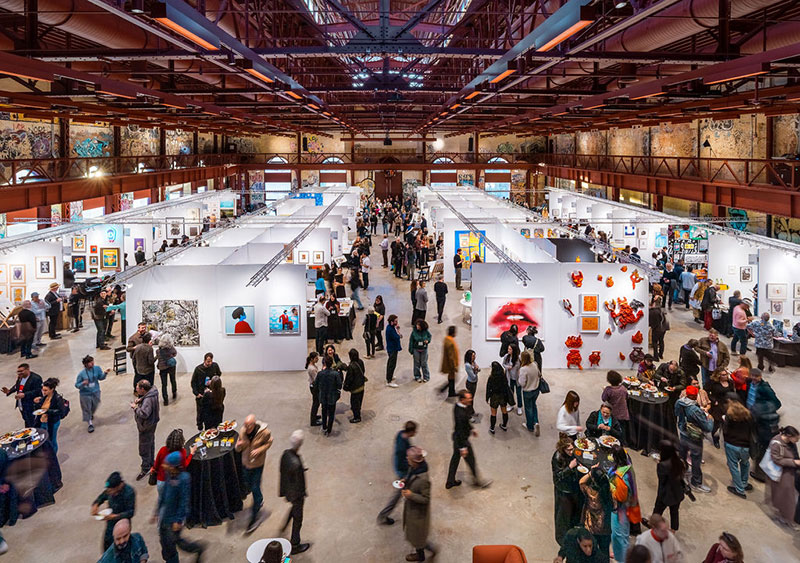
Go to a range of print fairs, IFPDA is where you’ll find blue chip galleries, whereas the Brooklyn Print Fair includes self-representing artists, schools, and publishers.
SGCI is the largest print fair in North America, and there are often smaller, regional conferences you can go to.
Print Collection Visits
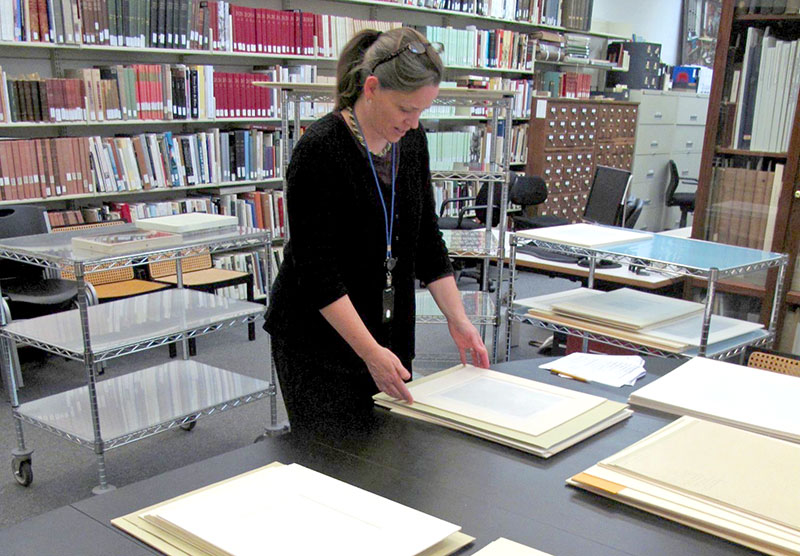
You can make an appointment to visit the print collection at most museums and libraries.
Each collection is different, but you can often request to see specific prints before your visit. Many places allow class visits as well.
Printmaking Residencies
Residencies in printmaking are a great way to learn a new technique, work on a specific project a focused, short term circumstance.
Be aware that there is a huge range of types of residencies. Some are fully funded, and others will ask you to pay for everything.
Art Print (Spain)
Atlanta Printmakers Studio (GA)
Center for Contemporary Printmaking (CT)
East London Printmakers (UK)
Gate 44 (Italy)
Grand Marais Art
Highpoint(MI)
Kala Art Institute (CA)
Lawrence Art Center (KS)
London Print Studio (UK)
Lower East Side Printshop (NY)
Mirabo Press (NY)
Print Club London (UK)
Scuola di Grafica (Italy)
Spudnik Press (IL)
Ratamo (Finland)
Temple Univ. Rome
Two Cents Press
ZACC (MT)
Zea Mays (MA)
Il Bisonte (Italy)
Colony (MI)
Networking
Networking = making friends! There’s no way you need to speak to people, and don’t tell yourself you have to have some big speech ready.
If you have a conversation with a curator, and they make you uncomfortable, or they intimidate you, that’s not a relationship that will ever work for you long term.
You have to show up in person, which is why openings, fairs, conferences, are so important to attend. Follow that up with an Instagram DM and keep showing up.
Social Media
The vast majority of people in the print ecosystem are on Instagram. Most artists are overwhelmed by Instagram because they think they have to do it all.
You don’t! Curators and gallerists don’t care if you haven’t posted in a month. They do care a lot about your Instagram grid, which is the first impression you are giving.
Stand out from thousands of MFA applicants
Avoid the traps that applicants fall into with our guidance!
We know preparing a portfolio is stressful and overwhelming. There is a lot of misinformation out there and you don’t want to waste time on things that don’t matter.

Know for sure that every component of the portfolio is comprehensively addressed. One weak component and truly can make or break your portfolio.
Mentoring
You’ve watched so many videos, but there is still so much you don’t understand and need answers on.
Mentoring creates a concrete plan that establishes a timeline to meet your needs. No more searching aimlessly only, or wondering what to do next.
“Prof Lieu’s instruction has been remarkable — enriched with concrete detail, actionable advice, and encouragement for a budding artist.”


