Silverpoint is a Renaissance technique for drawing where a piece of silver is used to draw lines onto a prepared ground. Characteristics of silverpoint are subtle, delicate lines which tarnish over time.
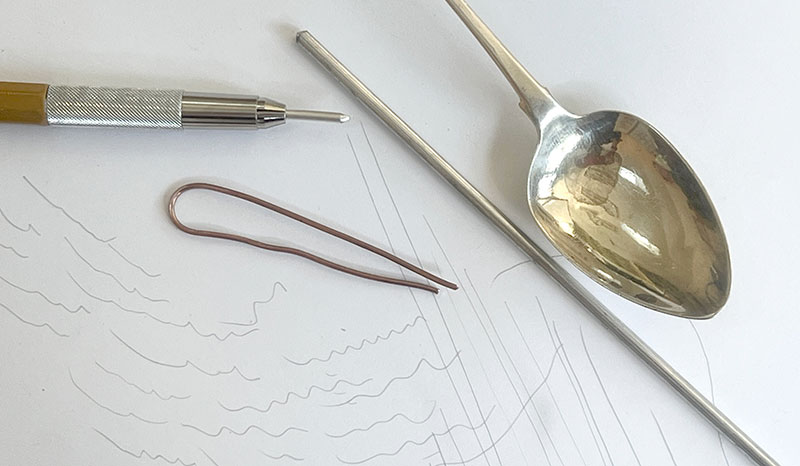
Table of Contents
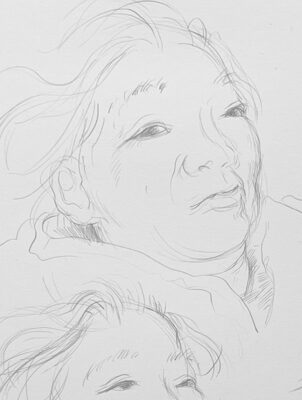
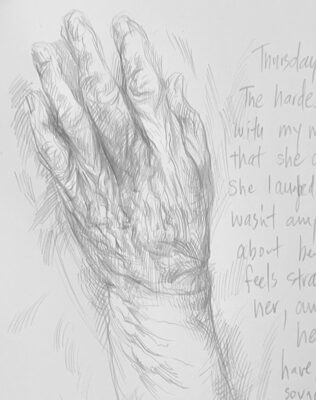
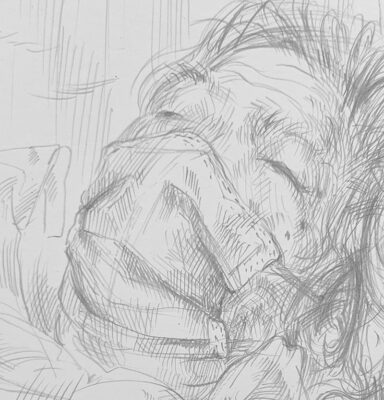
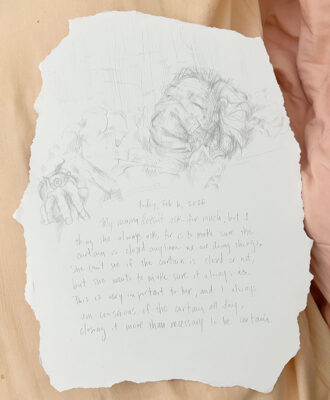
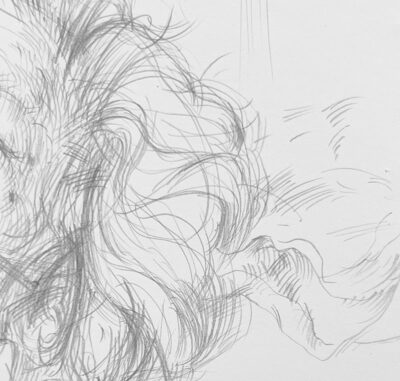
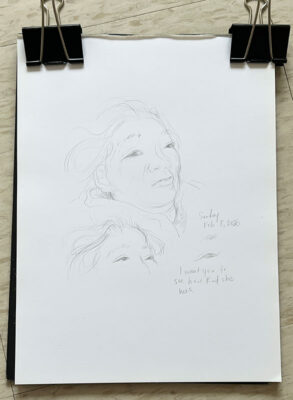
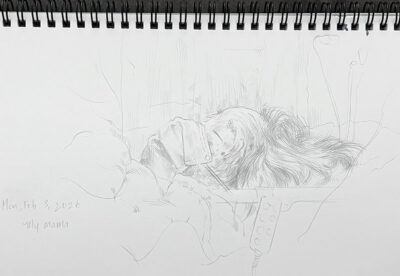
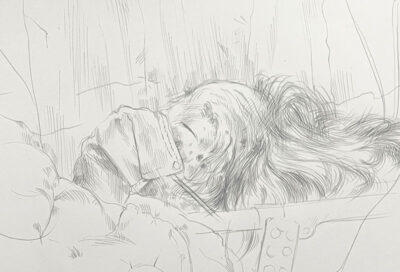
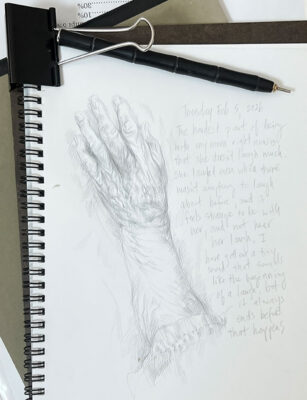
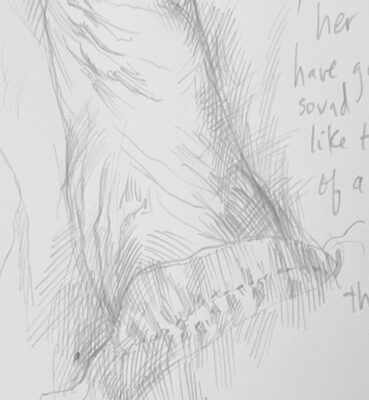
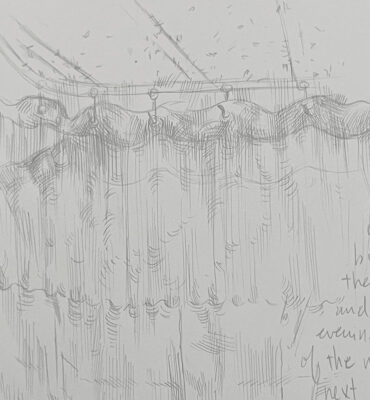
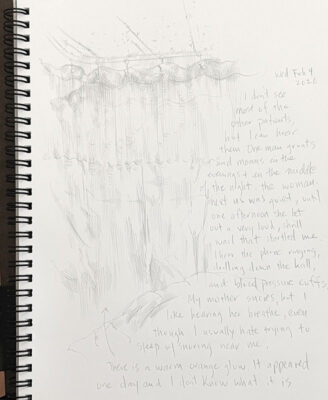
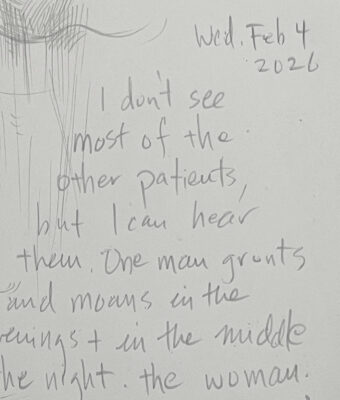
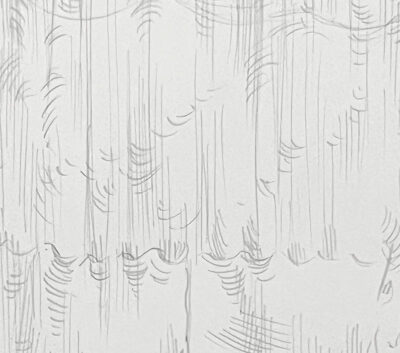
Clara Lieu, Mama in the hospital, Yasutomo silverpoint kit, on GAK Stone paper notebook + Central Clay Coat from NY Central Supply, a neutral pH, clay-coated paper and (this item is no longer available, the store is closed)
Grounds
Silverpoint requires a ground on paper in order for the marks to adhere. There are a range of grounds you can use; some are prepared for you, and you can also make the ground from scratch.
Prepared surfaces & grounds
- Ampersand’s Claybord, Gessobord, and Encausticbord will work, more info here on the differences.
- Many clay coated papers will work.
- Yasutomo Mineral paper + Mineral paper boards and GAK Stone paper notebook both work.
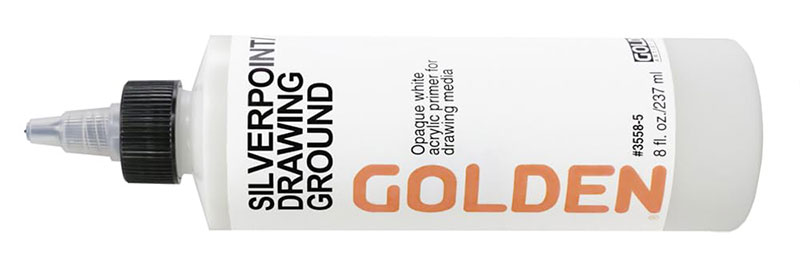
- Golden’s silverpoint/drawing ground (above) can be used on paper.
- Printmaking paper like Rives BFK or watercolor paper are durable enough for the ground, avoid papers that are thin.
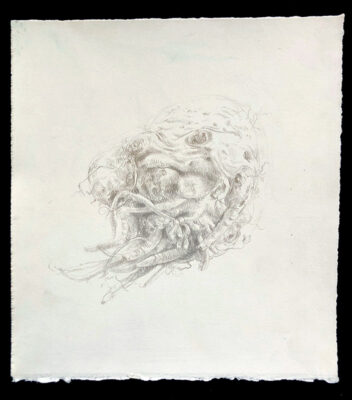
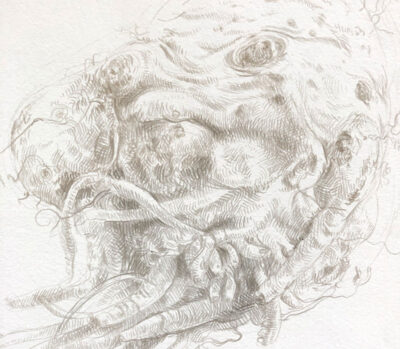
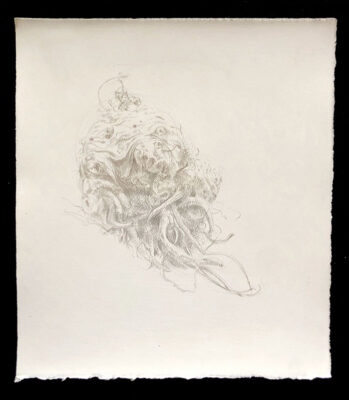
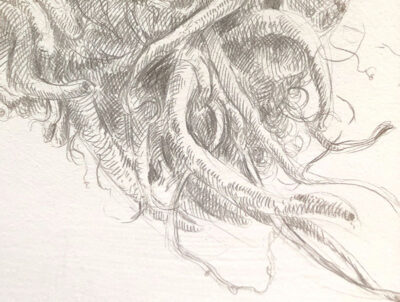
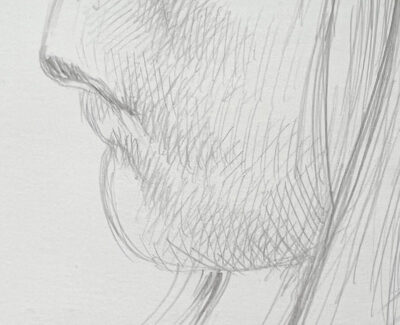
Above: Clara Lieu, Silverpoint on Rives BFK (a cotton rag printmaking paper) using Golden’s silverpoint/drawing ground.
Ground from scratch
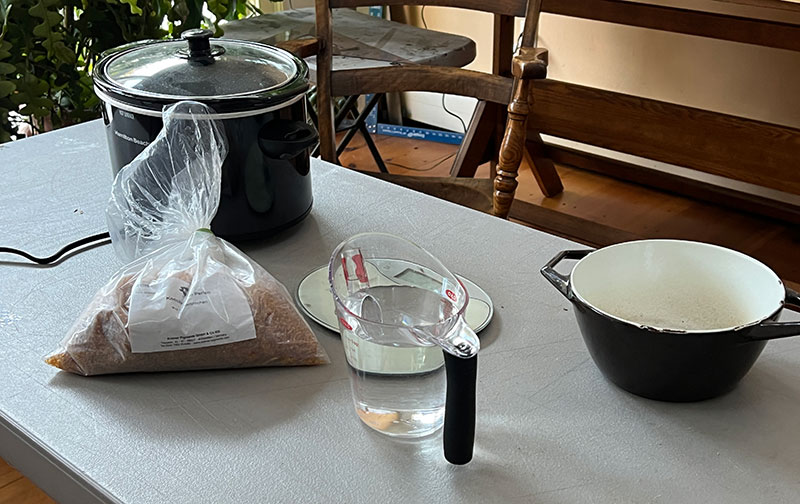
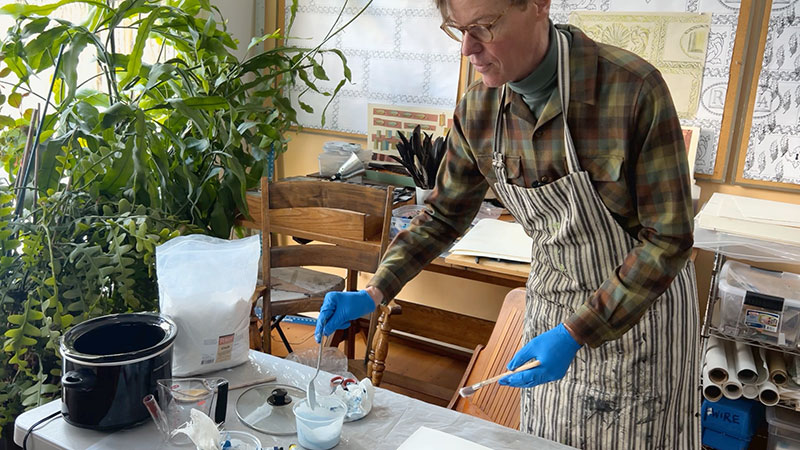
Andrew Raftery‘s recipe for ground from scratch uses calcium carbonate (chalk) + watercolor + Knochenleim Perlen. (glue)
Video tutorial coming soon, sign up to be notified
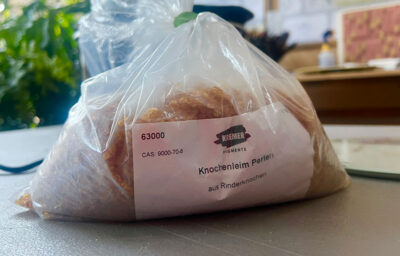
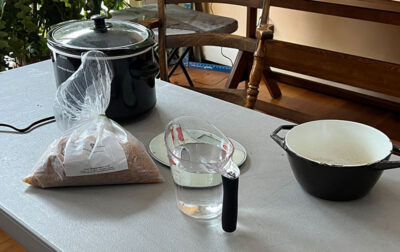
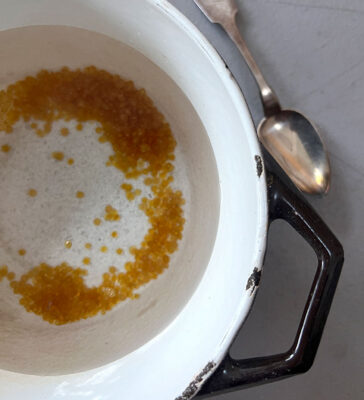
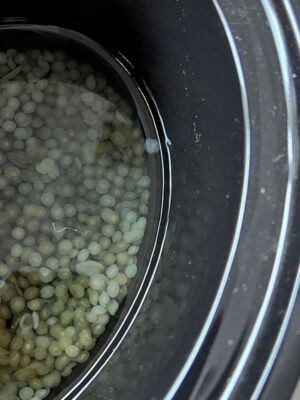
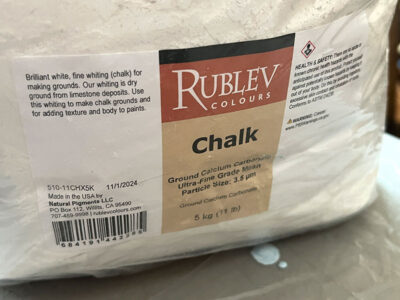
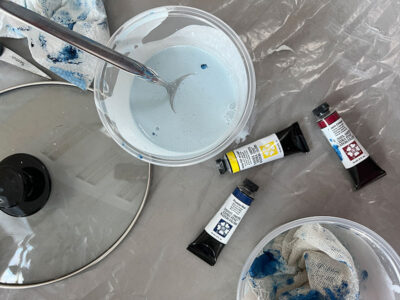
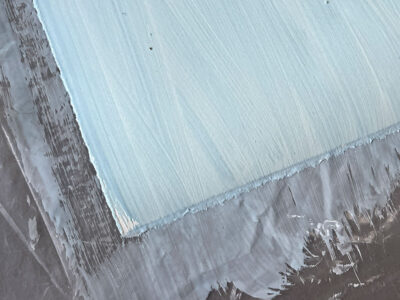
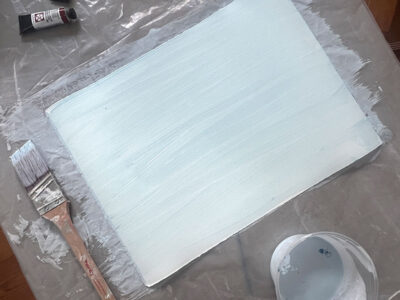
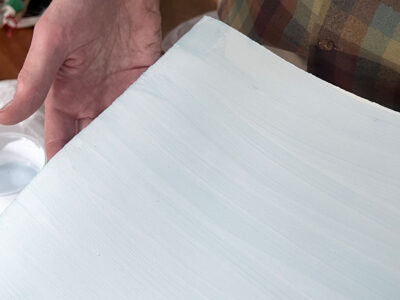
- Watercolor (Daniel Smith Prussian Blue above) can be added to the ground to tint the paper any color.
- There are many different recipes for silverpoint, look them up!
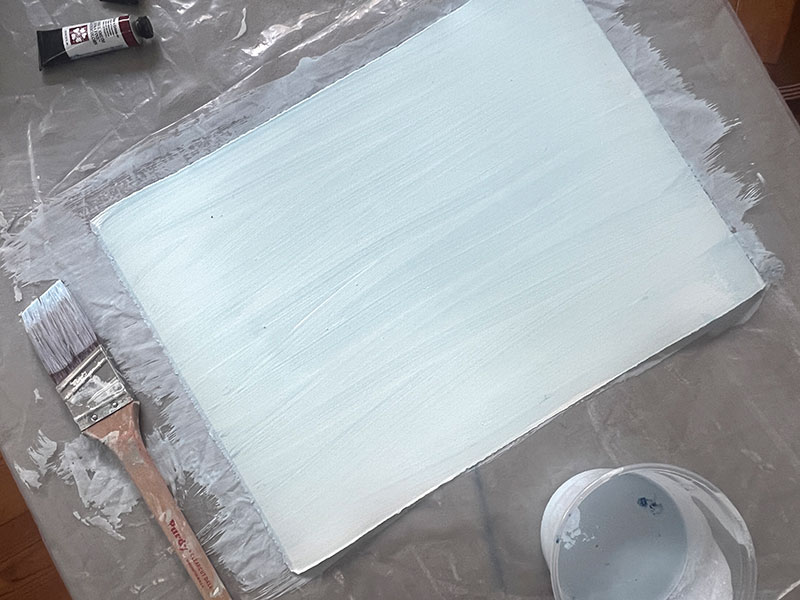
- This ground made from scratch is not perfectly smooth. (Claybord is)
- There is a slight grain which is a beautiful surface to draw upon.
Tools
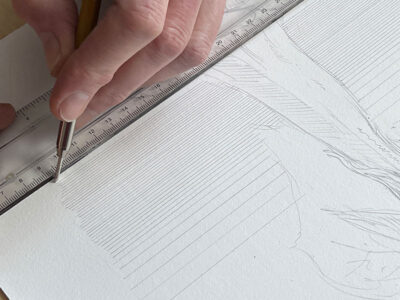
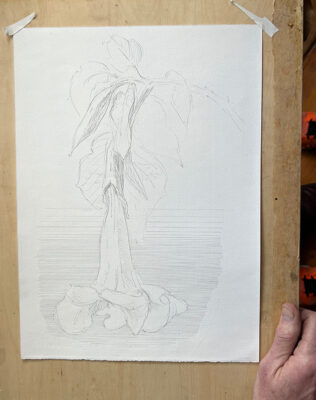
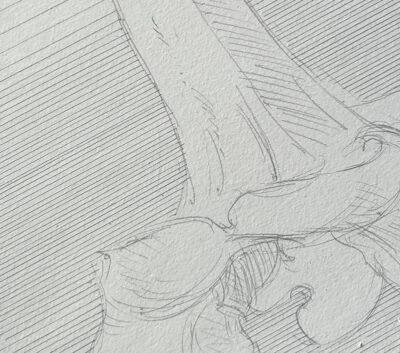
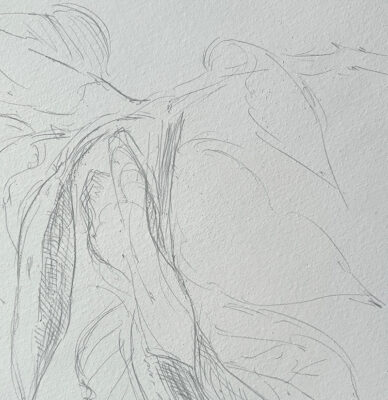
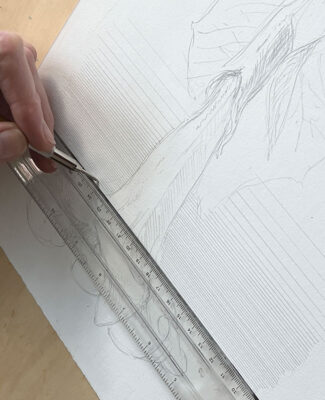
Any form of silver will do: a spoon, silver wire, etc. Below is Andrew Raftery’s silverpoint drawing on ground he made from scratch.

- You can put a piece of silver into a mechanical pencil stylus.
- Other metal point techniques include copper and gold.
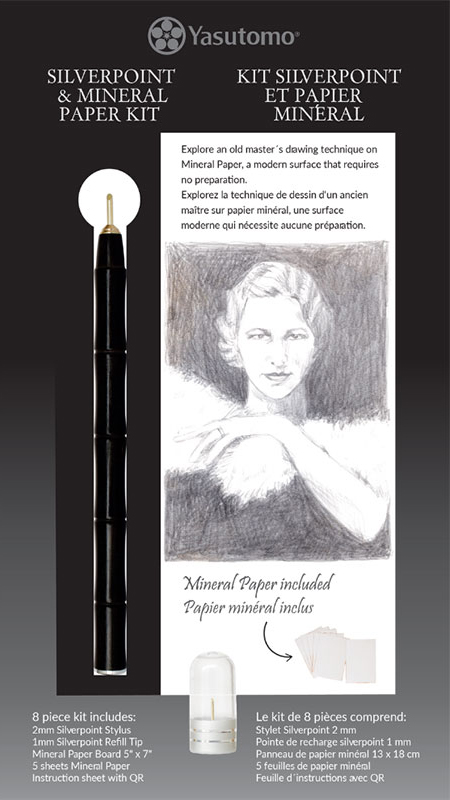
- Yasutomo has a Silverpoint & Mineral Paper Kit.

Technical aspects
While it may appear at first that silverpoint looks a lot like graphite, the quality and color in the line is very different. Silverpoint will tarnish over time, creating very subtle shifts of color within the drawing.
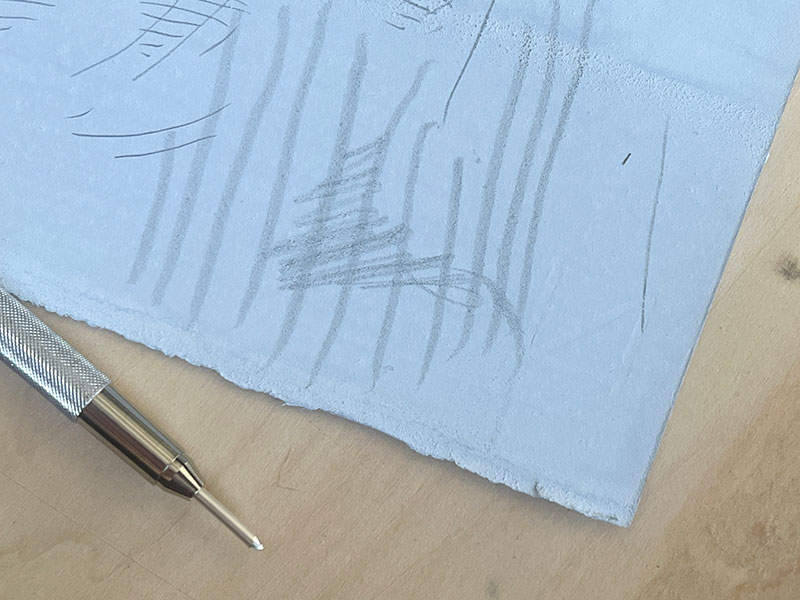
- The value range is limited, you will never get a full black.
- The lines are very light, delicate, and subtle. You will see that the lines are quite different from graphite.
- Contrary to what you’ll see online, silverpoint indeed can be erased with Mars white plastic eraser.
Silverpoint examples
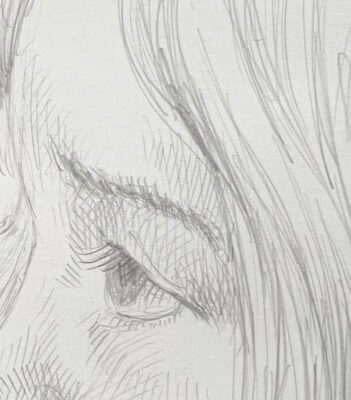
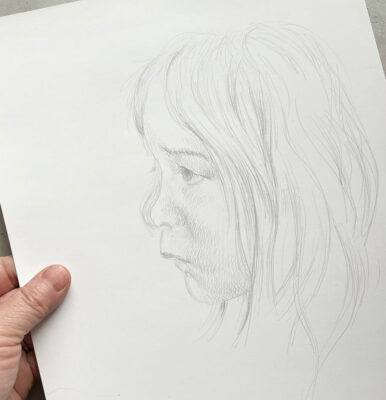
Above: Clara Lieu, Silverpoint on Central Clay Coat from NY Central Supply, a neutral pH, clay-coated paper. (this item is no longer available, the store is closed)
Silverpoint in Art History
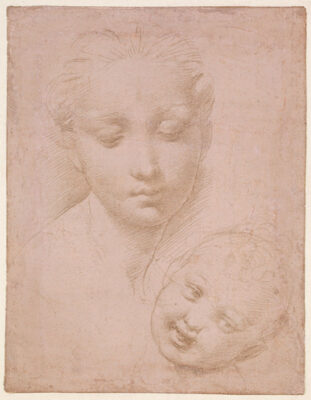
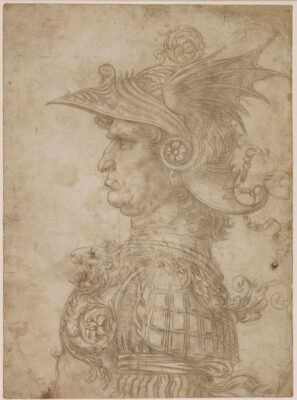
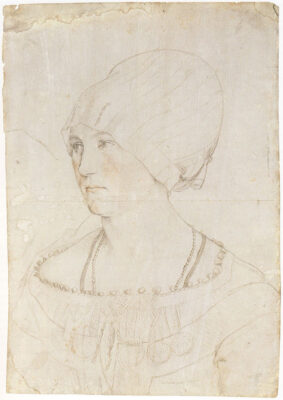
Silverpoint was popular during the Renaissance and was often used for preparatory drawings for a painting. Notice the limited value range in these drawings which creates a unique subtlety you won’t find in graphite.

- Albrecht Dürer, Self-Portrait at the Age of 13, 1484
- Raphael, Heads of the Virgin and Child, 1509
- Leonardo da Vinci, Bust of a Warrior in Profile, 1475
- Hans Holbein the Younger, Portrait Drawing of Dorothea Meyer, 1516